The EV Rental Math: When an Electric Car Saves You Money and When It Sinks Your Trip
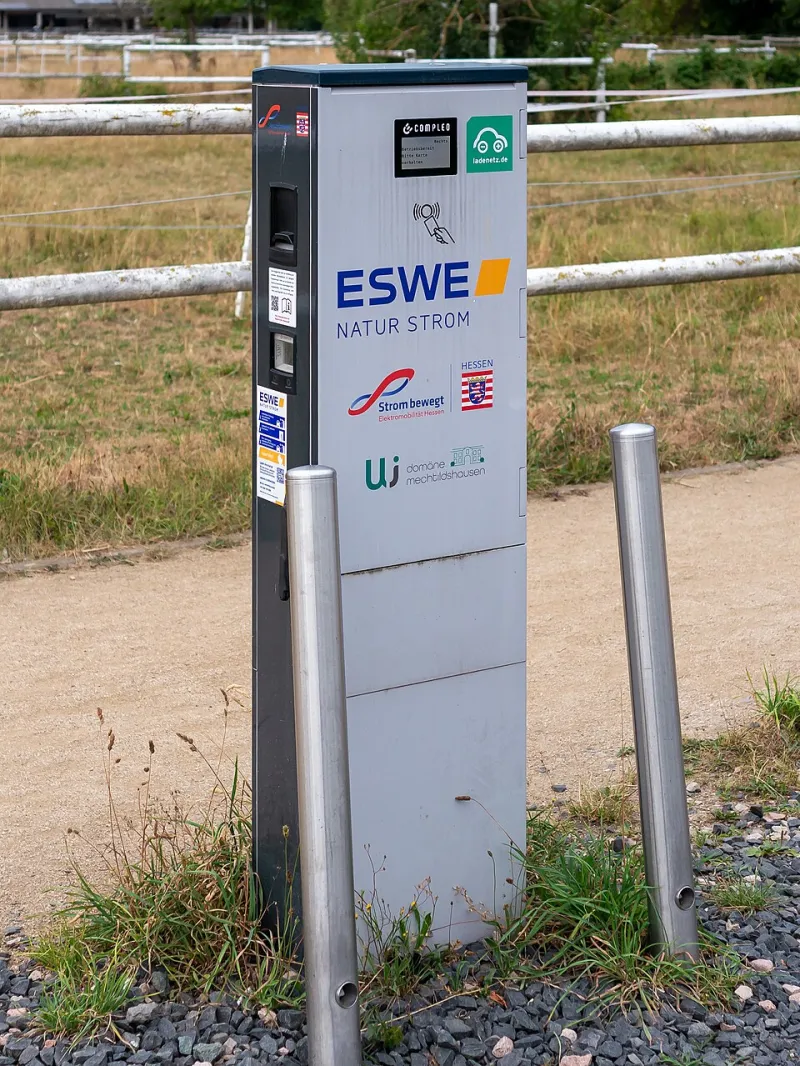
Photo: Matti Blume, CC BY-SA 4.0, via Wikimedia Commons
Electric vehicles now sit in the same booking grid as everything else, often at a lower daily rate than a comparable gas sedan. That price is real. So is the sticker shock that shows up later — sometimes as a return fee that costs more than a tank of gas, sometimes as a vacation afternoon spent hunting a working charger in a strip mall.
None of that means you should avoid EVs. It means the booking page isn't giving you the information you need to decide. Here's the version of the math that the reservation flow leaves out.
The rate is the smallest number in the equation
The daily rate gets all the attention because it's the number in bold. But an EV rental has three cost centers a gas rental doesn't: charging during the trip, the return-state-of-charge policy, and the value of your time.
Charging at home or at a hotel is nearly free. Charging at a public fast charger on a road trip runs roughly in the range of a moderately priced gas fill-up for the same distance — sometimes cheaper, sometimes not, depending on the network and whether you're paying a membership rate or the walk-up rate. The wildcard is that many charging networks price differently for guests than for subscribers, and rental cars almost never come with the subscription.
Then there's the return policy. Many rental companies ask you to bring the car back at or near the state of charge you received it. Miss that, and you're paying a per-kilowatt-hour fee to have the lot top it off — a rate that's typically well above what you'd pay at any public charger. On a big battery, that fee can land in the triple digits without much effort.
Range loss is not a rumor, it's a season
Every EV loses range in cold weather. This isn't a design flaw; it's chemistry plus cabin heating. Combine a 20-degree morning with highway speeds and a headwind, and you can see a meaningful chunk of your advertised range evaporate.
The same is true at the other extreme. Sustained heat stresses the battery and the air conditioning draws power. If you're renting in Phoenix in July or Minneapolis in January, plan your charging stops around a realistic range figure — not the one on the window sticker. A safe habit is to assume you'll get noticeably less than the EPA number and to plan charging stops with a buffer rather than running it down to single digits.
Not all plugs are created equal
This is where the booking page really fails travelers. The car you reserve may have one charging standard and the chargers along your route may speak another. Adapters now bridge some of that gap, and the major networks have opened up considerably, but compatibility still varies by vehicle, by year, and by whether the rental company bothered to leave an adapter in the trunk.
Before you accept the keys, ask directly:
- Which charging standard does this specific car use?
- Is an adapter included, and is it in the car right now?
- Does the car have access to the major fast-charging networks, or is it limited to one brand's network?
- Is there a charging cable for a standard wall outlet in the trunk?
That last one matters more than people expect. A 120-volt cable won't rescue a road trip, but it will keep you from losing charge overnight at a rental house with no garage charger.
Where the EV actually wins
An electric rental is a genuinely strong choice in three scenarios. If your trip is city-based with short daily mileage, most EVs are pleasant, quiet, and cheap to run — and hotel or garage charging can cover nearly all of it.
If you're staying somewhere with reliable overnight charging, you may never touch a public fast charger at all. That's the version of EV travel that feels effortless.
And if the rental company waives the return-charge requirement because you're bringing it back near where it started, the economics tilt even further in your favor.
Where it goes sideways
An EV is a poor fit if your itinerary is a long one-way drive through sparsely served country, if you're on a tight schedule with no slack for a charger that's out of service, or if your lodging has no realistic charging option and your days are packed.
It's also a rough choice for travelers who simply don't want to think about fuel logistics on vacation. That's a legitimate preference. Paying a little more for a gas car and never opening a charging app is a perfectly rational trade.
Questions worth asking before you sign
Beyond the plug questions, three more will save you grief at return:
What state of charge do I need to bring it back at, and what does it cost if I don't? Get the number, not the policy summary.
Does the car's navigation route through chargers, and does it know which ones are currently working? In-car routing on EVs varies wildly in quality.
Is roadside assistance included for a depleted battery, and does it count as a service call? Running out of charge is a different event than running out of gas, and coverage terms differ.
The honest summary
An EV rental can be a quiet, cheap, genuinely pleasant way to travel — or an unglamorous scavenger hunt. The rate on the booking page doesn't tell you which one you're getting.
The decision comes down to two things: where you'll sleep, and how much slack your schedule has. If the car can charge overnight where you're staying, you're in good shape. If it can't, and your days are booked solid, a gas car is the boring, correct answer. Check the return-state-of-charge terms before you confirm, ask the plug questions at the counter, and plan for a shorter real-world range than the spec sheet promises. That's the whole playbook.