Film It or Foot the Bill: The Two-Minute Habit That Ends Most Rental Damage Arguments
Photo: DanielMichaelPerry, CC0, via Wikimedia Commons
There is a specific kind of bad afternoon that begins at a rental return lane. You hand over the keys, the agent walks the car with a clipboard, and then comes the sentence: “There's a scuff on the rear bumper that isn't on the check-out sheet.” You have no memory of that scuff. You also have no proof it wasn't there when you drove off. What follows is a thirty-minute conversation, a damage report, and eventually a charge that can run from a few hundred dollars to well over a thousand once “loss of use” and “administrative fees” get stacked on top.
The whole thing is avoidable, and not with a fancy app or a paid damage-inspection service. You need your phone, decent light, and about two minutes of patience before you pull out of the lot. Think of it as the least glamorous part of your vacation and the one most likely to save you real money.
Why the counter usually wins
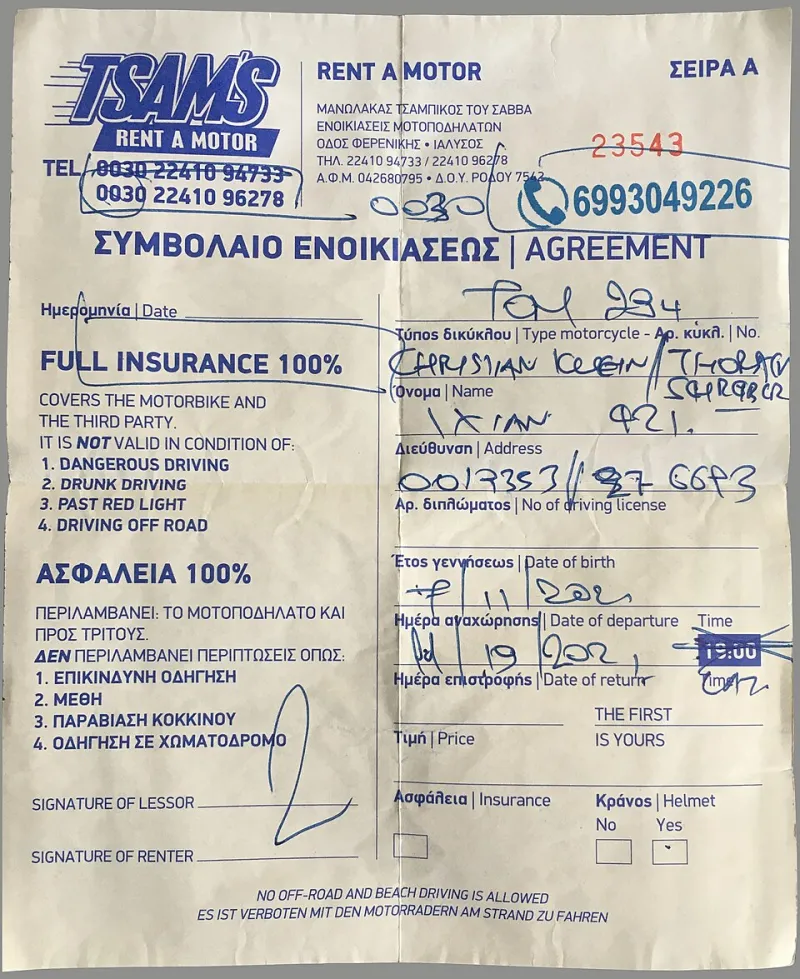
When you sign the rental agreement, you're accepting the car in the condition the company says it's in. The walkaround sheet — the little diagram with the car outline — is often filled out in a hurry, sometimes by a previous renter, sometimes by nobody at all. If a scratch, dent, or cracked lens isn't marked, the default assumption at return is that you did it.
The employee inspecting your car isn't being malicious. They're working from a document, and your memory of a parking garage in another state three weeks ago is not a document. A time-stamped video is.
The shot list: what actually protects you
Don't wander around the car narrating like a documentary host. Move deliberately, and get close enough that the footage would hold up on a laptop screen.
Start with the car itself, not the damage. Open on the license plate, then pan slowly to the odometer and the fuel or charge gauge. Say the date, the location, and the plate number out loud. This establishes that the footage is about this car on this day, which is the entire point.
Walk the four corners. At each corner, shoot one wide frame of the panel and then step in for a close-up of the bumper edge, the wheel, and the fender. Corners take the most abuse in parking lots and they're where claims cluster.
Get low on the bumpers. Crouch and film along both bumpers at a shallow angle. Overhead light hides scuffs that show up instantly under raking light. Your phone's flashlight, held off to the side rather than pointed straight at the surface, will reveal scratches that look invisible in flat daylight.
Shoot the glass and the lights. Windshield chips smaller than a quarter are the single most common “pre-existing damage” dispute. Film each light assembly and then sweep the windshield from the inside, where chips are easier to see against the sky.
Open the doors and the trunk. A slow pan of each door edge catches parking-lot dings. The trunk matters for the same reason — and it doubles as your record of what was in the car when you got it.
Film the roof. Nine out of ten renters forget it. It's also the panel most likely to collect hail damage you didn't cause.
The interior shot nobody takes
Most people film the exterior and call it done. Two interior frames are worth the extra twenty seconds. First, the seats and floor mats, because “excessive cleaning” fees are a real line item and a stained seat that was already stained is not your problem. Second, the dashboard with the ignition on — odometer, fuel gauge, and any warning lights all in one frame.
That dashboard shot does double duty. It proves the mileage you started with, which matters if your contract has a cap, and it documents the fuel level, which matters at return. Two birds, one very boring video.
Timestamps, metadata, and the storage question
Your phone stamps video with a date and time automatically, and that metadata is the backbone of your defense. Don't edit the clips, don't add filters, and don't trim the start. If you want extra insurance, narrate the date and time on camera — it's clumsy, but it's the version a claims adjuster can't argue with.
Here's the part people get wrong: they film the video, feel responsible, and then lose it. Footage buried in a camera roll of 400 vacation photos is functionally gone by the time a damage letter arrives.
Do this instead. Before you leave the lot, text the video to yourself or email it to an address you actually check, with a subject line like “Rental walkaround — [city], [date], [plate].” That puts a copy in the cloud with a searchable label. Then create a photo album named for the trip. When the bill shows up in December for a rental you picked up in October, you'll find it in under a minute instead of scrolling hopelessly.
If you're traveling with a partner, send it to both phones. Redundancy is cheap.
Do it again at return
The video isn't just for pick-up. Film the same loop when you drop the car, ideally before you hand over the keys and while the car is still in the return lane. This second video is what actually wins arguments, because it shows the car's condition at the exact moment it left your hands.
If the lot is busy and an employee is hovering, tell them what you're doing. In our experience, “I'm just documenting the condition before I turn it in” gets a nod, not a fight. Nobody at the counter objects to a renter who is organized.
If they push anyway
Sometimes you'll still get a damage report. Ask for the inspection sheet with photos and a timestamp, and compare it to your footage. Most disputes die right there, because the claim can't survive a side-by-side. If it doesn't, you now have a file: pick-up video, return video, signed agreement, and photos of the check-out sheet. That's a far stronger position than a phone call insisting you'd remember a scratch.
Two minutes in a hot parking lot. That's the whole ask. Do it once and you'll never skip it again.